

When selecting optical materials for research and industrial applications, understanding JGS1 vs JGS2 vs JGS3 is essential. While all three are high-purity quartz glass grades, their spectral transmission ranges from deep ultraviolet (DUV) to mid-infrared (MIR) differ significantly.
However, selecting the correct optical grade is vital. Choosing the wrong grade can lead to unexpected transmission loss in the ultraviolet or infrared bands, thermal failure, or unnecessary procurement costs.
This technical guide covers the primary applications of quartz glass, provides an engineering specification sheet with translated parameters, and explains exactly how to select between JGS1, JGS2, and JGS3.
1. What is Quartz Glass and Why is It Used in Advanced Engineering?
Quartz glass is an amorphous, single-component glass made of high-purity silicon dioxide (SiO2 > 99.9%). Its strong silicon-oxygen (Si-O) molecular bonds give it unique advantages over standard industrial glass:
- Extreme Thermal Shock Resistance: An exceptionally low coefficient of thermal expansion (5.2 – 5.8 x 10^-7 / K) allows it to withstand abrupt temperature shifts from 1100 deg C directly into cold water without cracking.
- Broad Transmission Range: Optical transparency spans from the deep ultraviolet (DUV) through visible light and into the mid-infrared (MIR) spectrum (185 nm to 3500 nm).
- High Working Temperature: The deformation point reaches 1200 deg C, with continuous operating stability up to 1100 deg C.
- Superior Chemical Stability: Inert to virtually all acids (except hydrofluoric acid and hot concentrated alkali) with zero impurity diffusion at elevated temperatures.
- Excellent Dielectric Insulation: Ultra-high volume resistivity (1 x 10^16 Ohm-cm at 20 deg C) with minimal dielectric loss across high-frequency RF fields (10 GHz).
2. Key Applications of Quartz Glass
A. Laboratory and Academic Research
- Spectrophotometry Cuvettes: Deep-UV transmission down to 185 nm enables high-precision absorption spectroscopy.
- High-Temperature Reaction Tubes: Essential for tube furnaces, chemical vapor deposition (CVD), and vacuum chambers.
- Photochemical Reaction Vessels: Outstanding laser damage threshold under continuous irradiation.
B. Optical and Laser Systems
- Laser Windows and Lens Substrates: Bubble-free material with high optical homogeneity.
- Prisms, Mirrors, and Optical Filters: Minimal thermal expansion prevents focal plane drift.
C. Semiconductor and Photovoltaic Manufacturing
- Wafer Carriers, Boats, and Flanges: Ultra-low trace metal content protects semiconductor yield.
- Photolithography Windows: High DUV transparency for precision exposure systems.
D. Electronics and Display Panels
- Conductive Glass Substrates (ITO / FTO Coatings): Acts as a heat-resistant substrate for transparent conductive films.
- Sensor Protection Windows: Protects optical sensors, photodetectors, and thermal imaging cameras.
3. Comprehensive Quartz Glass Technical Specification Sheet
Table 1: Chemical Properties
Table 2: Electrical Properties
Table 3: Physical & Thermal Properties
Table 4: Mechanical Properties
Note: Unless otherwise specified, all values refer to measurements taken at room temperature (<= 25 deg C).
Table 5: Thermal Behavior Reference (Expansion & Viscosity Trends)
4. Optical Comparison Matrix: JGS1 vs JGS2 vs JGS3
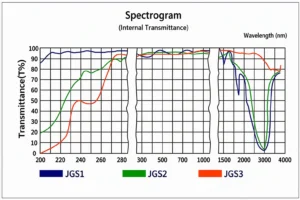
Table 6: Optical Comparison Matrix (JGS1 vs JGS2 vs JGS3)
Quick 3-Step Selection Guide
- Do you need Deep Ultraviolet (DUV) light transmission between 185 nm and 220 nm?
- Choose JGS1. It is the premier choice for laser optics, lithography blanks, and UV analytical instruments where zero fluorescence and bubble-free optical clarity are mandatory.
- Do you need Infrared (IR) transmission extending from 2500 nm up to 3500 nm without OH- absorption loss?
- Choose JGS3. JGS3 eliminates the 2.73 micron water absorption dip, making it ideal for thermal imaging, infrared sensing, pyrometer viewports, and gas analysis.
- Is your operating wavelength within the standard UV-Visible-NIR range (260 nm to 2000 nm) where cost efficiency is important?
- Choose JGS2. It offers balanced optical and mechanical characteristics for sight glasses, UV curing fixtures, and general laboratory glassware at a lower cost than synthetic silica.In summary, the choice of JGS1 vs JGS2 vs JGS3 depends on your specific operational wavelength.
5. Custom Quartz Glass Fabrication Capabilities
Choosing the right quartz grade is only the first step; high-precision machining determines final component performance.
At Shenzhen Chenshi-Tech Co., Ltd. (CHENSHI-TECH), we supply custom quartz components and electronic glass panels for research institutes, universities, and industrial manufacturers:
- Available Materials: JGS1 (Synthetic Silica), JGS2 (Optical Quartz), JGS3 (Infrared Quartz), High-Borosilicate Glass, and Conductive Glass (ITO / FTO).
- Machining Capabilities: CNC profiling, chamfering, hole drilling, step edge polishing, optical double-sided polishing (Surface accuracy: Lambda/4 to Lambda/10; Scratch-Dig: 40-20 or 20-10), and custom anti-reflective (AR) / dielectric coatings.
- Custom Sizing: Thickness from 0.2 mm to 50 mm, custom round wafers, square plates, stepped glass covers, and custom CNC cutouts.
Here are frequently asked technical questions regarding JGS1 vs JGS2 vs JGS3 selection.
Frequently Asked Questions (FAQ)
Q1: What is the main difference between Fused Quartz and Fused Silica?
A: Fused Quartz (such as JGS2 and JGS3) is manufactured by melting natural high-purity quartz crystal. Fused Silica (such as JGS1) is synthetically produced by the chemical flame hydrolysis of silicon tetrachloride (SiCl4), delivering superior chemical purity, zero fluorescence, and higher UV transparency.
Q2: Why does JGS1 show an absorption dip around 2700 nm?
A: JGS1 contains residual hydroxyl groups (OH-) introduced during flame combustion synthesis. These OH- groups cause molecular vibrational absorption across the 2600 nm to 2800 nm infrared band.
Q3: Can quartz glass be tempered like standard float glass?
A: No. Quartz glass cannot be thermally tempered because its coefficient of thermal expansion is too low (5.5 x 10^-7 / K) to establish the necessary surface compressive stress layer. However, its natural compressive strength (1100 MPa) is already far higher than standard annealed glass.
Q4: What is the maximum safe operating temperature for quartz glass?
A: Quartz glass can operate continuously at temperatures up to 1100 deg C and withstand short-term exposure up to its deformation point of 1200 deg C without structural degradation.
Need a Custom Quote or Technical Advice?
Contact the CHENSHI-TECH engineering team to review your technical drawings, tolerances, and optical requirements.